I am continually humbled in the world of design. Each day I learn something new, and am challenged to rethink my biases and recognize when I am wrong.
It is so easy to be convinced that your well-thought-out design solution is the only answer, only to realize once put in front of a user that there is lots of room to grow. It’s one of the greatest aspects of this career. To sum up my philosophy, I would say keep things simple, focused on the end user, and backed with solid design principles. Visual design should be fully integrated with the message you are trying to convey and both should carefully target the needs of the end-user. Design should delight, enhance, and challenge you to think.

Listen first
Users are the focus of everything we do.
As designers we need to ask good questions, and fully understand the needs of the user and why we’re doing what we’re doing. Listening is key. Are we hearing our users and empathizing with their needs? Or do we allow our biases to influence the outcomes? I’ve learned many times over that no matter how convinced I am of my design, it may not resonate with the needs of the user—a continual reminder to keep an open mind and stick to my principle of elevating a good idea no matter where it comes from.
Collaborate
I believe in the power of a team to imagine something better.
The strength and value of an idea should take precedence over who it comes from. Whether it is the creative professional or the most unlikely candidate, all ideas must be considered with equal weight and carefully sifted and combined when necessary to design the best solution. In my experience, a multi-disciplinary collaborative team that loves good design is unbeatable in growing and developing great solutions. I rely on the experience and skill of each person on the team to contribute to the best outcome.
Start fast
All ideas should be given a chance to thrive.
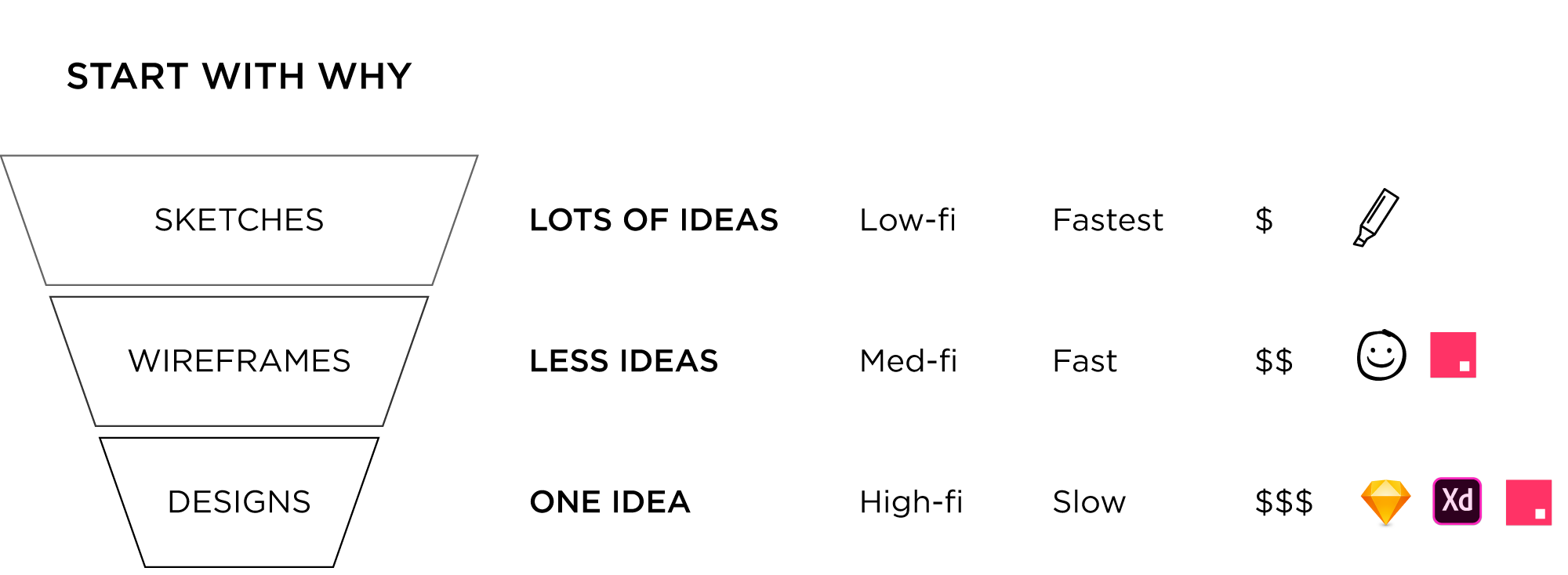
I think the best path to this outcome is to start fast and loose, giving each idea equal weight. This begins with whiteboarding or sketching, where the team can generate lots of ideas and not be overly discerning. At the end, choose some of the strongest ideas to take to the next level. As we progress towards a final fully designed and documented solution, the ideas should progress from low fidelity (where it’s easy and cheap to make changes), to progressively higher fidelity designs. Be more discerning at each level, pulling out the best solutions and testing with customers. It is easier and faster to make changes early on, and presenting multiple options allows you to weigh the pros and cons of each solution.
Design funnel
I use this illustration of a design funnel with my team to challenge us to think critically at early stages in the process so that we have opportunity to explore more ideas.
Educate
Good design should influence all areas of a company.
Design education is key to increasing general awareness of and increasing buy-in from other areas of the company. I try to keep education center of mind and have achieved it by simply explaining the principles behind my design choices, to taking learning opportunities within the company to present design principles.
Design is experience
Design creates great experiences.
It is not only the way things look, but also the method by which we go about crafting great experiences. When each piece of a brand/product is carefully considered and designed from a foundational set of design principles, it comes together to form an experience that differentiates and sets apart from the rest. There is no part of a brand small or big that should be excluded from the design process, as each contributes to the success of the whole.